
Case Study: Talking about local government role in decent homes
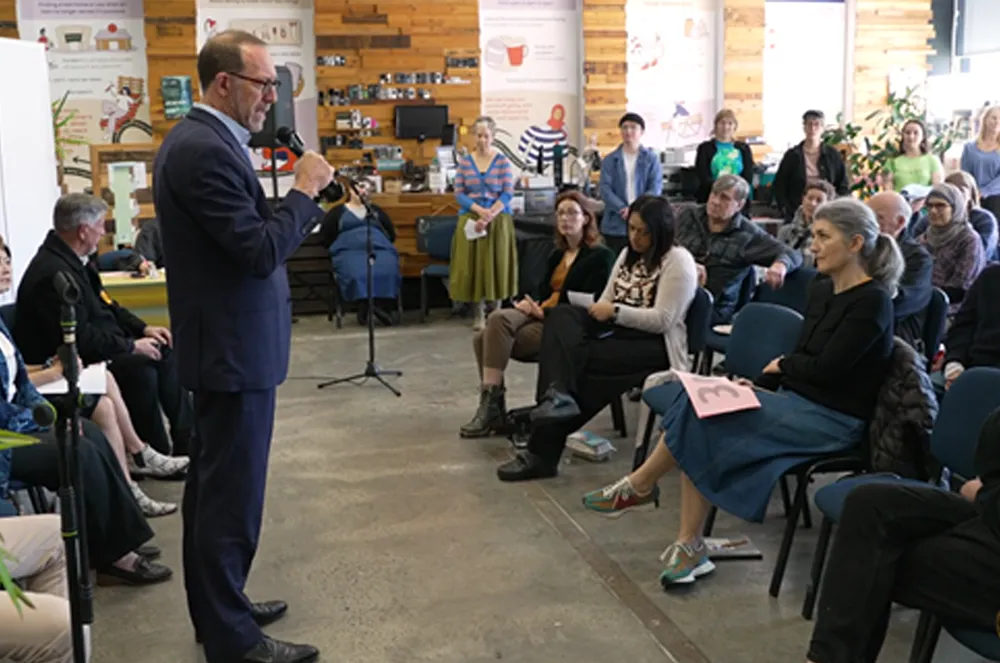
New Zealand’s Local Body Elections are held every three years. In 2025 Wellington Regional Healthy Housing Group (WRHHG) and organisations from the Decent Homes Communication Community of Practice initiated a communication campaign in the lead-up to local elections. The aim was to increase public understanding of, and amplify language and narratives that helped people talk about, council role in a system that supports decent homes for us all.
The campaign produced key messages, and communication material including blog posts and social media content. WRHHG direct mailed mayoral candidates and delivered a mayoral candidates Town Hall debate hosted by CoP member Sustainability Trust for mayoral candidates in the capital city, from which video clips were produced and shared.
The campaign material was shared on more than 11 social media profiles (LinkedIn, Facebook, Instagram), and via in-person correspondence, and messaging was picked up in mainstream media platforms including national television.
The campaign resulted in new collaborations and connections with actors interested in decent homes for all and raised the profile of the WRHHG and the Decent Homes Communication Community of Practice. The profile and effectiveness of the campaign led to key messaging and the campaign approach being picked up by the national network of NGO Habitat for Humanity as a model for their national election campaign planning the following year.
“
Having the local election content ready to go made it easy to get leadership sign-off to pick it up and share on our socials. Once they saw how effective it was, they were interested in using the content and approach in our national election communication.
”
Who was involved?
Wellington Regional Healthy Housing Group (WRHHG) is a collective impact initiative which led the Healthy Homes Communication Action Research project from 2022-2025 in partnership with The Workshop. The Decent Homes Communication Community of Practice (the CoP) was established under the project to bring together people working on improving the quality of homes in New Zealand drawing on a narrative approach to communication.
Habitat for Humanity is a federated group of regional non-profit organisations dedicated to eliminating substandard housing by providing families with safe, healthy and affordable housing. Two of the regional organisations – Habitat Central and Northern are active in the Community of Practice.
What happened?
In the lead up to the 2025 local body elections, WRHHG and the CoP felt that there was an opportunity to shift the narrative around housing and deepen public understanding, particularly about:
- What decent homes for us all looks like
- The systemic nature of healthy housing challenges, and
- The role and power of local councils in creating decent homes for us all.
Research had identified the New Zealand public recognised an important role for homes in supporting individual and collective wellbeing, and believed there was a problem with home health in the country – and that Government had a role in fixing this. But there was an absence of consistent and accessible narratives and frames enabling people to explain and understand the relationship between government actors and the health of homes.
The local election campaign tested messaging and tactics to bridge this gap. The primary purpose was to amplify language and narratives that helped explain council role in a system that could support decent homes for us all. The group wanted to illustrate the range of council functions and avoid partisanship.
To do this they focused on six examples of actions that they knew a council or councils around the country had taken that had led to documented benefits for access to decent homes. Members of the CoP had already worked together on other communication activities. They had trust in each other and shared a common approach.
With local elections scheduled for October, a CoP workshopping session was held in May 2025. From this and follow-up work, messaging and collateral was developed that focused on the jobs homes do to enable people to participate fully in school, work, and community, and the role that local councils could play in determining whether decent homes were available to all.
Campaign content
The campaign created several pieces of media and social media content, including:
- 6 Actions Councillors can take for Decent Homes article, shared via direct email to candidates and a post on the WRHHG’s website. This created a landing page for social media posts.
- Content for social media posts.
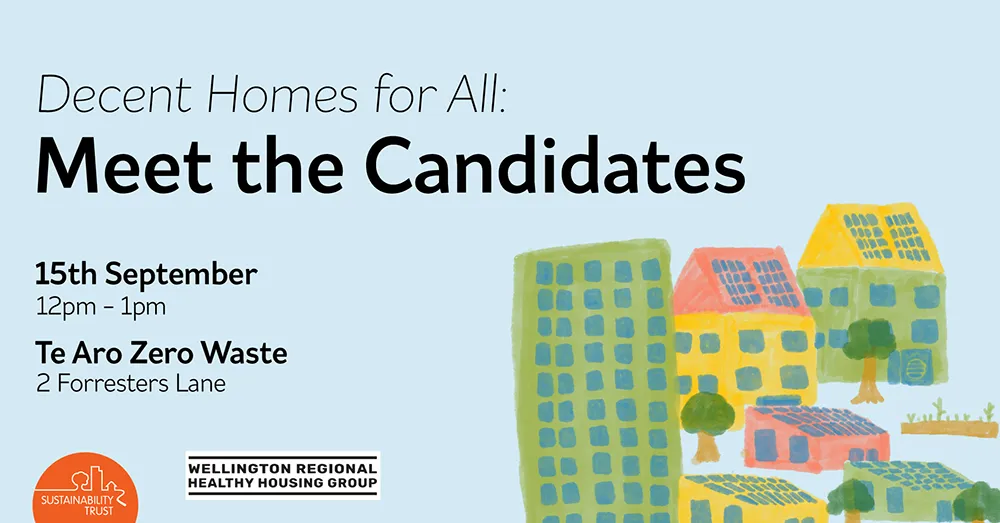
- Letter to Wellington City Mayoral candidates sharing the campaign’s purpose, messages and an invitation to the Town Hall event.
- A Town Hall mayoral candidate debate for Wellington City mayoral candidates hosted by Sustainability Trust (a WRHHG member organisation and part of the CoP).
- 2 minute video clips from the video recording of the Town Hall event that were then converted to social media content.
The impact
1. Diverse organisations – including new collaborators – shared messages to reach a broad audience
- Shared via senior leadership and organisational LinkedIn profiles of 7 influential housing sector organisations, with strong engagement. WRHHG Executive Officer LinkedIn post received 1625 impressions – around three times more than any previous post – and resulted in three new connections. Links to 6 Actions Councillors Can Take were shared via Facebook, Instagram, and newsletters by member organisations. Analytics showed good click-through rates (2 to 3 per cent), and the WRHHG website post that click-throughs were sent to received 1135 views. Shorter social media posts were shared via Facebook, Instagram.
- Volunteer local action groups working on housing policy connected with WRHHG as result of the Town Hall event – some of members of these groups attended the event in person or watched online.
- Mayoral candidates participating in the Town Hall shared via their own social media
2. Mainstream media picked up the narrative
CoP member Habitat for Humanity (HfH) Northern picked up and used the messaging in some of their own communications. This resulted in two mainstream media opportunities (TVNZ and The Spinoff) that adopted the helpful framing:
- Elements of the Local Election messaging were used together with messaging developed during an earlier Curtain Call campaign (see ‘Curtains have a job to do!’ case study) in a briefing to a Spinoff journalist in preparation for a story on curtain banks.
- The Spinoff curtain bank story resulted in the invite from TVNZ’s Breakfast to do a live cross interview with a curtain bank champion. HfH staff used the messaging to brief their spokesperson and the result was that the story was framed helpfully – most notably it avoided leading with the common unhelpful frame of ‘saving money’.
The mainstream pick-up created content that could be shared widely through social media and e-newsletters, increasing the reach and number of instances where the helpful framing was used.
3. Messaging and approach picked up as a model for national election communication
Following this campaign, the two Habitat for Humanity organisations involved in it brought the campaign – and its results – as an example and model to influence a framework for how Habitat would approach advocacy ahead of the upcoming general election.
“Having the local election campaign content ready to go made it easy to get leadership sign-off to pick it up and share on our socials. Once they saw how effective it was, they were interested in using the content and approach in our national election communication.” – Tracey C, Support Services Manager, HfH Central
Examples of communication material related to this case study:
- Website post on ‘6 things councillors can do’: https://www.wrhhg.org.nz/councillors-role-for-a-well-functioning-housing-system/
- Web post sharing short video excerpts from Town Hall event: https://www.wrhhg.org.nz/mayoral-candidates-for-wellington-talk-council-role-in-decent-homes/
- WRHHG Executive Officer LinkedIn post ‘6 Actions Councillors can Take’: https://www.linkedin.com/posts/amanda-scothern-aa298169_our-local-elected-representatives-have-an-activity-7366323473436041216-4ZE?utm_source=share&utm_medium=member_desktop&rcm=ACoAAA6PUNoBZYjbKuHW0huZce-11WLbNXTEqOg
- Example CoP member LinkedIn post ‘6 actions..’ from HfH Central CEO LinkedIn account, reposted by others: https://www.linkedin.com/feed/update/urn:li:activity:7368405267450953728/
- Sustainability Trust FB and Instagram
- Spinoff article ‘Curtain banks are in hot demand’: https://thespinoff.co.nz/society/21-07-2025/curtain-banks-are-in-hot-demand
- TVNZ Breakfast clip (via Habitat Northern Facebook page): https://www.facebook.com/reel/1051498206963377